
For retailers selling party supplies, one of the biggest advantages of birthday products is simple: birthdays happen every day of the year.
Unlike Christmas, Ramadhan or other seasonal celebrations, birthday demand does not depend on a particular month. Every week, customers are looking for balloons, candles, banners, table decorations, gift bags, wrapping paper, greeting cards and other products to help celebrate someone’s special day.
For retailers, this makes birthday products an ideal evergreen category. But simply carrying the products is not enough. A well-planned birthday display can make it easier for customers to find what they need, encourage additional purchases and turn a single product sale into a much larger basket.
Here is how retailers can create a birthday display that works throughout the entire year.
1. Make Birthday Products Easy to Find
The first rule of an effective retail display is visibility.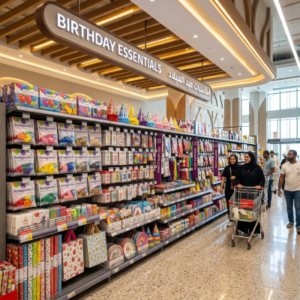
Customers shopping for birthday supplies should not have to search through several aisles to find what they need. Whether you operate a physical shop or an online store, create a clearly identifiable birthday section.
In a physical store, consider grouping birthday products together under a simple sign such as Birthday Party Supplies or Birthday Essentials.
For an online retailer, create a dedicated birthday collection and organise it into useful subcategories such as:
- Birthday decorations
- Balloons
- Birthday candles
- Party accessories
- Greeting cards
- Gift bags
- Gift boxes
- Wrapping supplies
The easier the category is to navigate, the easier it becomes for customers to complete their purchase.
2. Build the Display Around the Complete Birthday Occasion
One of the most common mistakes retailers make is displaying products individually rather than thinking about the customer’s complete shopping mission.
Someone buying birthday decorations may also need a greeting card. Someone purchasing a birthday gift may need a gift bag and wrapping paper. Someone buying a cake may need candles.
Instead of thinking, “Where should I put the balloons?” think, “What does someone need to celebrate a birthday?”
This approach allows you to build a complete birthday destination rather than simply a shelf of individual products.
For example, a birthday display could include:
Decorate: balloons, banners and party decorations.
Celebrate: candles and table accessories.
Gift: gift bags, boxes and wrapping materials.
Message: birthday greeting cards.
This creates natural opportunities for cross-selling.
3. Use Different Price Points
Not every customer has the same budget, so a strong birthday assortment should include products at different price levels.
 Your display might include simple, affordable products for customers who only need one or two items, alongside larger or more elaborate products for customers planning a bigger celebration. That is why at Al Qadah we have brands like Sempertex and Party Palace. Together, they complete the need for a variety in price points.
This gives customers the freedom to build their purchase according to their budget. 
It also gives retailers an opportunity to increase the average transaction value.
For example, a customer might initially come looking for a simple birthday balloon. If the display also presents matching candles, a greeting card and gift bag, the customer may leave with four products instead of one.
4. Cater to Different Ages and Occasions
“Birthday” is not a single customer segment.
Parents may be shopping for children’s birthdays. Teenagers may want more contemporary designs. Adults may prefer elegant or understated products. Customers may also be celebrating milestone birthdays such as 18th, 21st, 30th, 40th, 50th or 60th birthdays.
Retailers should therefore avoid building a birthday display around only one style.
Where the product range allows, consider organising products by customer need:
- Children’s birthdays
- Teen birthdays
- Adult birthdays
- Milestone birthdays
- General birthday celebrations
This makes the display more useful while also allowing retailers to serve a broader customer base.
5. Keep Evergreen Products at the Centre
Trends can change, but some birthday products will always have demand.
Retailers should make sure their core assortment remains consistently available. These evergreen products form the foundation of the display.
Birthday candles, basic decorations, greeting cards, gift bags and wrapping products are examples of categories that can generate demand throughout the year.
Trend-driven products can then be added around this core assortment.
This approach helps retailers avoid depending too heavily on short-lived trends while still keeping the display fresh.
6. Refresh the Display Without Changing the Category
An evergreen display does not have to look the same every month.
Small changes can make the section appear new without requiring a complete redesign.
For example, retailers can rotate featured products, change the arrangement of colours, introduce different birthday themes or highlight products suitable for particular age groups.
Online retailers can achieve the same effect by changing the products shown at the top of their birthday collection.
The objective is to maintain the same dependable category while giving returning customers something new to discover.
7. Use Cross-Selling to Increase Basket Size
Birthday products are particularly well suited to cross-selling because many products naturally belong together.
A retailer can encourage customers to think about the entire celebration by placing complementary products together.
For example: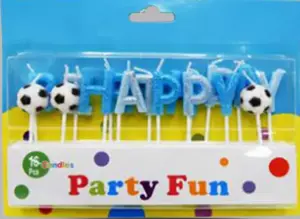
Birthday decorations + candles
Gift bag + greeting card
Wrapping paper + gift box
Balloons + birthday banner
Gift packaging + greeting card
These combinations don’t necessarily require discounts. Simply making customers aware of related products can increase the number of items purchased.
For retailers, this is one of the strongest reasons to create a dedicated birthday display rather than scattering birthday products throughout the store.
8. Plan Stock Around Demand, Not Seasons
Because birthdays happen all year, retailers should approach birthday inventory differently from seasonal categories.
Christmas and Ramadhan products may require significant seasonal stock planning. Birthday products, however, should form part of the retailer’s ongoing replenishment strategy.
Track which birthday products sell fastest and which remain on the shelf longer.
Over time, this information can help you answer important questions:
- Which products should always be in stock?
- Which designs sell most quickly?
- Which price points perform best?
- Which products are frequently purchased together?
- Which products should receive more shelf space?
Using sales information to guide purchasing can reduce slow-moving inventory while ensuring that popular products are available when customers need them.
9. Don’t Forget the Gift Side of the Purchase
Birthday shopping isn’t only about decorating the party.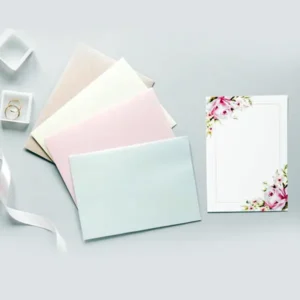
Many customers visiting a birthday section are also buying a gift. This makes gift packaging and greeting cards particularly valuable additions to the display.
A customer buying a birthday gift may need:
- A gift bag or box
- Wrapping materials
- A greeting card
- A decorative accessory
These relatively small additional purchases can make a meaningful difference to the value of each transaction.
For retailers, the opportunity is not simply to sell a party product. It is to become the place where the customer can complete their entire birthday purchase.
10. Think of Birthday as a Permanent Retail Department
The biggest opportunity for retailers is to stop treating birthday products as a temporary promotional section.
Birthday products can be a permanent retail department.
Unlike highly seasonal products, the category can generate sales throughout January, February, March and every other month of the year. It can also complement other seasonal categories when they are in demand.
For example, a retailer can maintain a core birthday section while temporarily adding Christmas products during December or Ramadhan and Eid products during their respective seasons.
This creates a balanced product mix: seasonal products create peaks in demand, while evergreen birthday products provide an opportunity for sales throughout the year.
Building a Better Birthday Business
A successful birthday display is ultimately about making shopping easier.
Retailers should aim to create a section where customers can quickly find decorations, candles, cards and gift packaging—and discover complementary products they may not have originally planned to buy.
For wholesalers and retailers, this also highlights why having access to a broad range of party and gifting products is important.
Party Palace by Al Qadah brings together products designed for celebrations, gifting and special occasions, giving retailers the opportunity to build a comprehensive birthday assortment rather than relying on a handful of individual products.
When birthdays happen every day, your birthday category should be ready every day too.
A well-planned, well-stocked and regularly refreshed birthday display can turn an ordinary retail section into a dependable year-round source of sales.